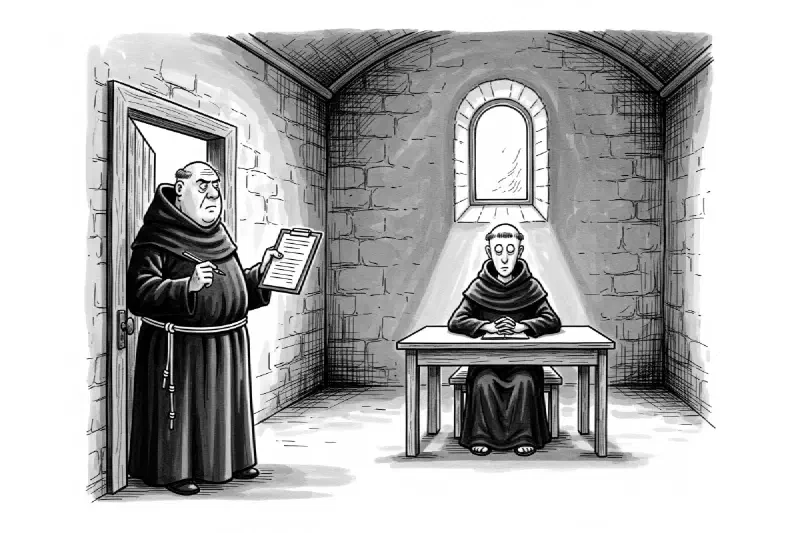
“Team” is what we call a department once we need something from it that a salary alone cannot buy. Nothing else changes. The reporting lines stay. The cubicles stay. The people who have been openly hostile to each other since the Q3 offsite stay. We change the word, and with it arrives a useful fiction: that the people in this room chose each other, share a purpose, and are in this together. They are not. But the word costs nothing, and the alternative is an honest conversation about incentives, which costs considerably more.
The loss column is where “team” does its heaviest lifting. Missed targets belong to the team. Attrition, morale scores, the client who left without explanation: all team-level phenomena, available for team-level accountability at the next all-hands. The manager’s contributions to these outcomes occupy a different structural layer with different accounting rules. Wins flow up. Losses distribute. This is not an accident of organizational design. It is the point of it.
What lives inside a team on any given Tuesday is roughly this: one person doing the work of three and keeping quiet about it, one person who has not updated their Jira since February and will not be asked to explain why, and one person who describes themselves as “a connector” and has not produced a deliverable since onboarding. Above them, someone who calls this group a team with complete sincerity, because the quarterly bonus depends on it.
Go, team.