01
The Grand Illusions
The Outright Hoaxes
The asset did not exist. The technology did not work. The cash was gone. These were not complex frauds. They ran on belief.


A Steerania Book · 2026
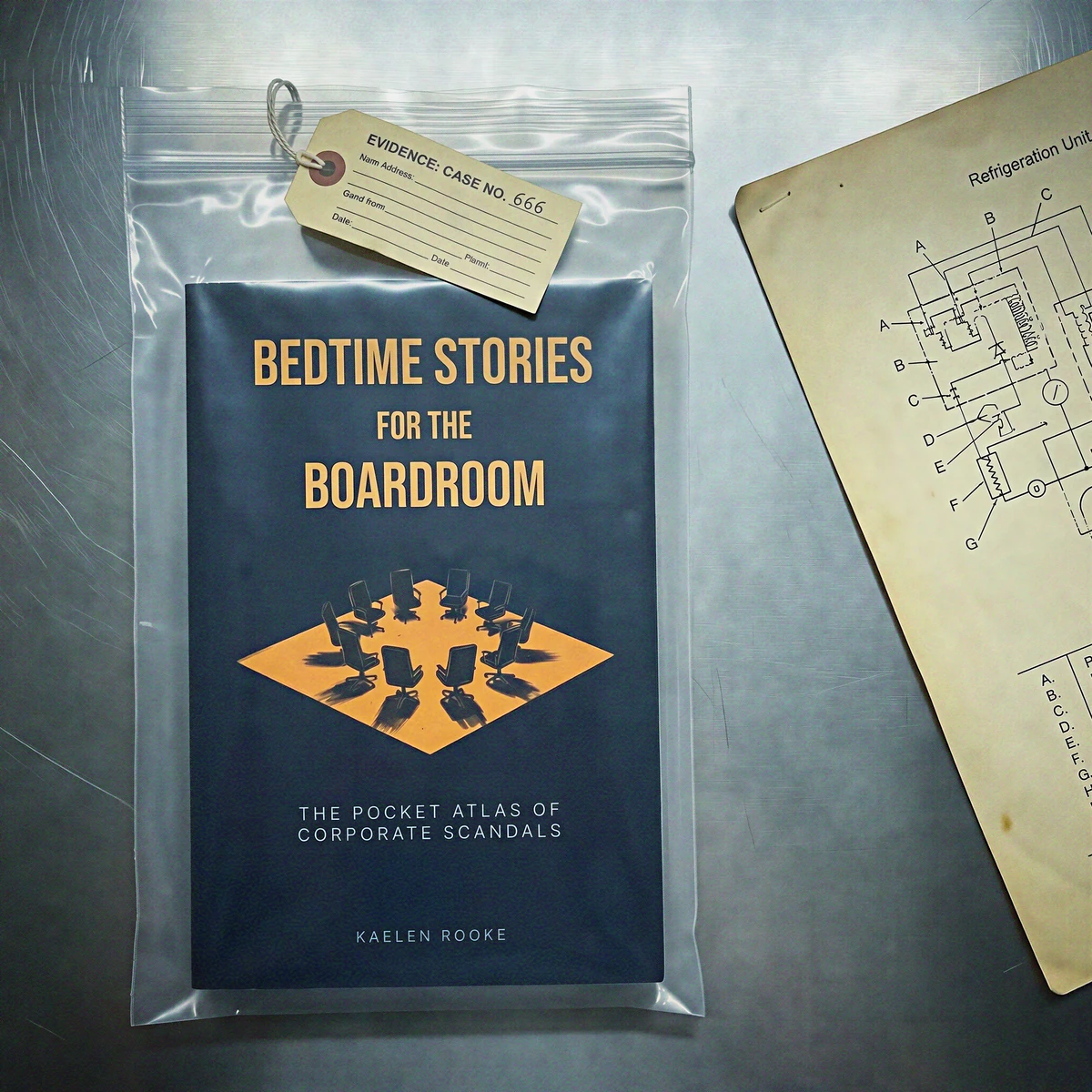
Enron. Wirecard. Barings Bank. Different decade. Different industry. Same ghost. This is the pocket atlas of corporate scandals. Sixty‑seven cases across nine decades, from a New Jersey oil tank in 1963 to the algorithm on the device in your hand today.
What is inside
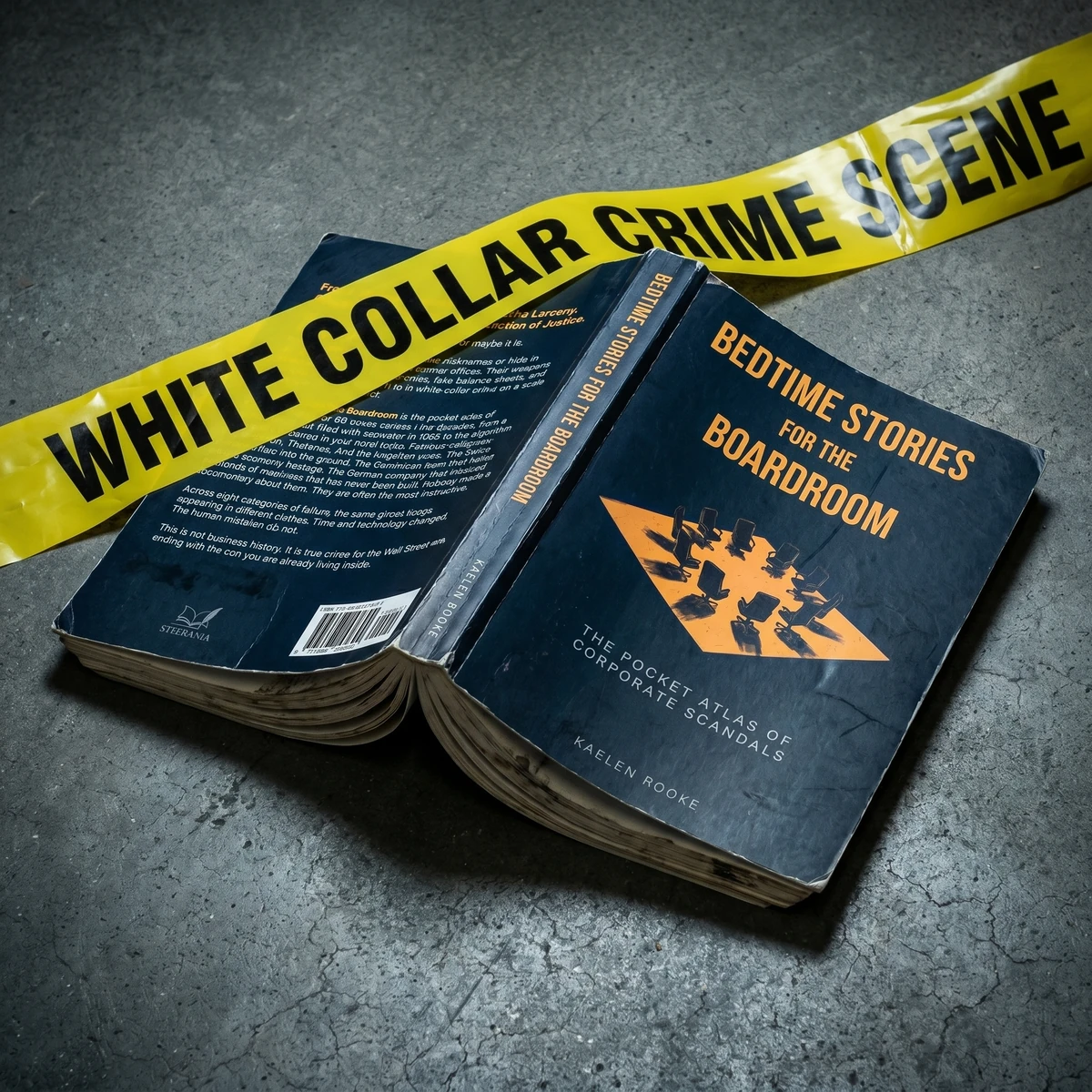
The characters in this book do not use nicknames or hide in basements. They have titles and corner offices. Their weapons are not guns. They are shell companies, fake balance sheets, and buried clauses in contracts. This is white‑collar crime on a scale the mob could only dream of.
Across eight categories of failure, the same ghost keeps appearing in different clothes. Time and technology changed. The human mistakes did not. This is not business history. It is true crime for the Wall Street era, ending with the con you are already living inside.
Chapter map · 8 categories
The Outright Hoaxes
The asset did not exist. The technology did not work. The cash was gone. These were not complex frauds. They ran on belief.
Those Who Broke the Math
Not thieves, mostly. The smartest people in the room. The most leverage. The most certainty. Then the model met the market.
When Executives Loot the Company
These were public companies. Their executives treated the public part as optional.
Accounting Fraud and Deception
Real companies, real employees, real offices. The only fiction was the profit. And the auditors signed off anyway.
Negligence and the Human Cost
Someone weighed the cost of fixing the problem against the cost of not fixing it. They chose wrong. People paid.
Giants Who Lost Their Way
No fraud, no theft. Just the wrong call, at the wrong scale, by people too proud to reverse it.
When the Watchdogs Sleep
Every fraud in this book had a gatekeeper. These are the cases where the gatekeeper had a reason to look the other way.
Data, Deceit, and the Modern Scandal
The oldest tricks. The newest technology. The same willingness to believe. The con did not evolve. Only the screen did
Inside the book · Three cases from the 67
Someone switched off the refrigeration unit to save money. Three thousand people died that night.
One trader brought down a 233-year-old institution. The bank sold for £1.
Traders rigged the number underpinning $350 trillion in financial products. By email. With jokes.
Inside the book · Two pages


Six cases · The author's take
BCCI wasn't a bank that happened to serve criminals. It was a criminal operation with a banking license, built from the start to stay beyond the law.
The subprime crisis was a conspiracy of optimism. Risk never agreed to the deal, and when it came due, it took everyone down with it. A few bankers went to prison; most walked away rich.
Volkswagen literally taught a car how to lie. A masterclass in corporate hypocrisy: a company selling an image of green innovation while secretly designing the opposite.
Time and technology changed. The human mistakes did not.
Order the book
The last word
“The most valuable asset in this economy is not on a balance sheet. It is the ability to recognise the story being sold, and the rare, stubborn refusal to buy it.” — Kaelen Rooke
Available worldwide
The conclusion
The con ends where it started.
On the screen you are reading.
Sixty‑seven cases. Nine decades. One recurring ghost. The file is open.
Keep reading
The cases don't stop. Neither does the reading. Subscribe!
Errata & corrections → steerania.com/errata